
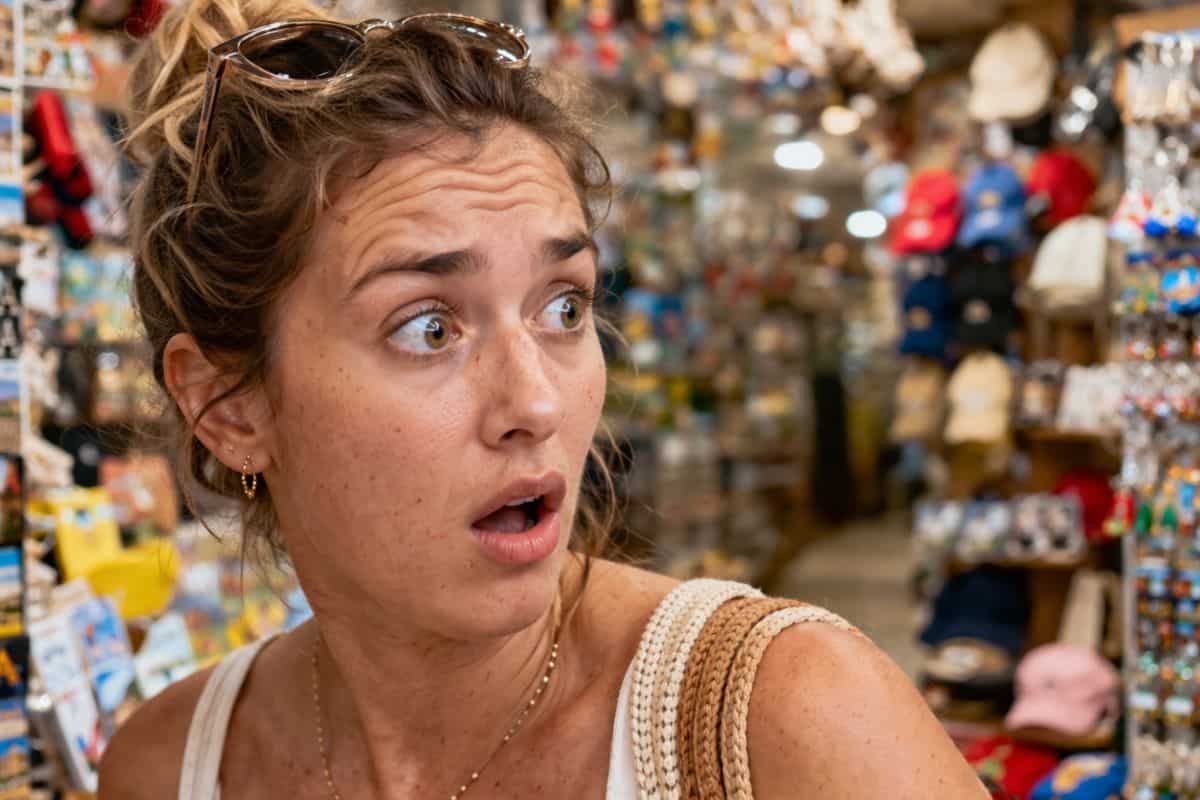
I still remember when travel felt a little more innocent. You could show up somewhere famous, let the crowds do their thing, and believe the day would somehow take care of itself.
Now, so many trips start with a price tag and end with a shrug. The same places still pull people in, but the magic often gets buried under fees, lines, and the uneasy feeling that everyone is being nudged to spend more than they planned.
That is probably why tourist traps are so stubborn. They are not just bad deals; they are familiar promises dressed up as memorable experiences.
I am not alone. Here is what people are actually saying.
1. Souvenir shops that sell the same three things for three times the price
There is always a little row of shops near the biggest attractions that looks harmless enough. Then you walk inside and realize the “local” magnet, T-shirt, and snow globe all came from the same warehouse with a better storefront.
People still buy them because it feels wrong to leave empty-handed. But a lot of those souvenirs are less about memory and more about impulse, which is exactly how the trap works.
2. Restaurants with menus built for tourists, not locals
Some places are practically designed to make travelers feel safe. The menus are huge, the photos are glossy, and every dish seems to cost just a little more than it should.
What makes it feel worse is that the food is often fine, just not special enough to justify the bill. You leave full, but also a little embarrassed that you paid so much for something that would not survive a second thought back home.
3. “Skip the line” tickets that still involve a line
This one has become its own kind of heartbreak. You pay extra because you are told you are buying time, then you end up standing in a separate line with everyone else who also thought they were buying time.
The worst part is how reasonable it sounds when someone sells it to you. Nobody wants to waste a vacation day waiting, so the upsell feels practical right up until it does not.
4. Overcrowded viewpoints that look better in postcards than in real life
There are famous views that absolutely deserve the fame. Then there are the spots that get crowded so quickly that the experience becomes a battle for elbow room and a clean photo.
That is when the trip starts to feel strangely performative. You are not really taking in the view anymore; you are trying to prove you were there.
5. “Authentic” tours that feel scripted from the first minute
The word authentic gets used so often that it has almost lost its meaning. A lot of tours still claim it anyway, even when the pace feels rushed, and the stories sound rehearsed.
Travelers usually want one thing from a guide, and that is a sense that they are hearing something real. When every stop feels prepackaged, the whole day starts to look like a sales funnel in a sun hat.
6. Chain restaurants are parked right next to major attractions
There is something deeply discouraging about flying somewhere new and then eating at the same chain you could get near home. It happens more than people admit, especially when the area around an attraction is built to be convenient instead of interesting.
It is not that chain food is bad. It is just hard to feel transported by a meal that tastes exactly like Tuesday back home.
7. Gift shops that turn every landmark into the same merchandise
Once you have seen one rack of “I survived” shirts, you have seen most of them. The design changes, but the message stays the same, which is usually that the experience has been reduced to a joke about spending money.
These shops survive because people want proof they went somewhere meaningful. Yet the cheapest-looking souvenir often ends up costing the most in the memory.
8. Famous attractions that are mostly a photo stop now
Some places have become so widely photographed that standing there in person feels oddly familiar. You have seen the angle on social media, seen the filters, seen the exact pose a thousand times before you ever arrived.
That can flatten the experience in a way people do not expect. Instead of discovery, you get recognition, and recognition is not always the same thing as wonder.
9. Pricey observation decks that sell the city twice
There is a certain thrill to seeing a city from above. But a lot of observation decks now come with premium tickets, timed entries, and add-on experiences that make the whole thing feel more like a branded event than a simple view.
The skyline is still the skyline. It is everything wrapped around it that makes some people walk away feeling like they paid for the idea of awe instead of awe itself.
10. Roadside attractions built around a single gimmick
Americans are especially vulnerable to the promise of the weird and wonderful. A giant ball of yarn, the world’s largest spoon, the odd museum off the highway, it all sounds charming until you realize the stop lasts ten minutes and the admission fee feels like a dare.
And yet, people still pull over. Part of that is curiosity, but part of it is the hope that the next silly landmark will somehow become a real memory.
11. Souvenir photos taken before you even know the price
The setup is usually friendly and fast. Someone hands you a prop, tells you to smile, and captures a moment that feels harmless enough until the printed photo is suddenly sitting there like a receipt.
A lot of travelers buy it because it seems rude not to. That is what makes it such a tidy little trap, because the pressure is social as much as financial.
12. Amusement parks that charge for nearly every extra minute
Theme parks know how to sell enchantment, and most of them are very good at it. But the experience can start to crack when food, parking, fast passes, and even small conveniences keep stacking up.
Families still go because the day is built around joy, and that matters. Still, there is a difference between paying for a special outing and feeling like every cheerful moment has a surcharge attached to it.
13. Boat tours that sound peaceful until the hidden fees appear
A boat ride near a famous harbor or coastline can sound like the perfect vacation memory. Then you notice the fuel fee, the reservation fee, the “premium seating” fee, and the fact that the best view is now partially blocked by ten other people trying to do the same thing.
The ride itself may be lovely. But the bill often arrives with enough friction to dull the calm before you even get back to shore.
14. Guided experiences that spend more time in souvenir stops than in the actual destination
This is one of the sneakiest ones. You book a full day because you want to see the place, but the itinerary keeps stopping at places designed to sell things instead of showing things.
By the end, you realize the destination was almost secondary. The real business was moving people from one purchase opportunity to the next.
15. The big-name landmark that feels compulsory more than joyful
Some places become tourist traps simply because everyone says you have to see them. That pressure can make an ordinary visit feel heavy before it even starts.
The landmark itself is not always the problem. Sometimes it is the crowd, the hype, the cost, and the expectation that the moment should mean more than it does.
Why does this keep happening anyway?
Tourist traps survive because people are not foolish. They are hopeful, tired, excited, and usually only in town for a short time.
That is what makes these places so effective. They are not selling a bad experience outright; they are selling the version of a trip people still want to believe in.
And maybe that is the real disappointment. It is not always the attraction itself that ruins the moment, but everything built around it, until the simple pleasure of being there starts to feel commercialized.
The best travel memories usually come from what feels a little less packaged. A quiet street, a simple meal, a view nobody told you to chase, that is where the feeling still lives.
