
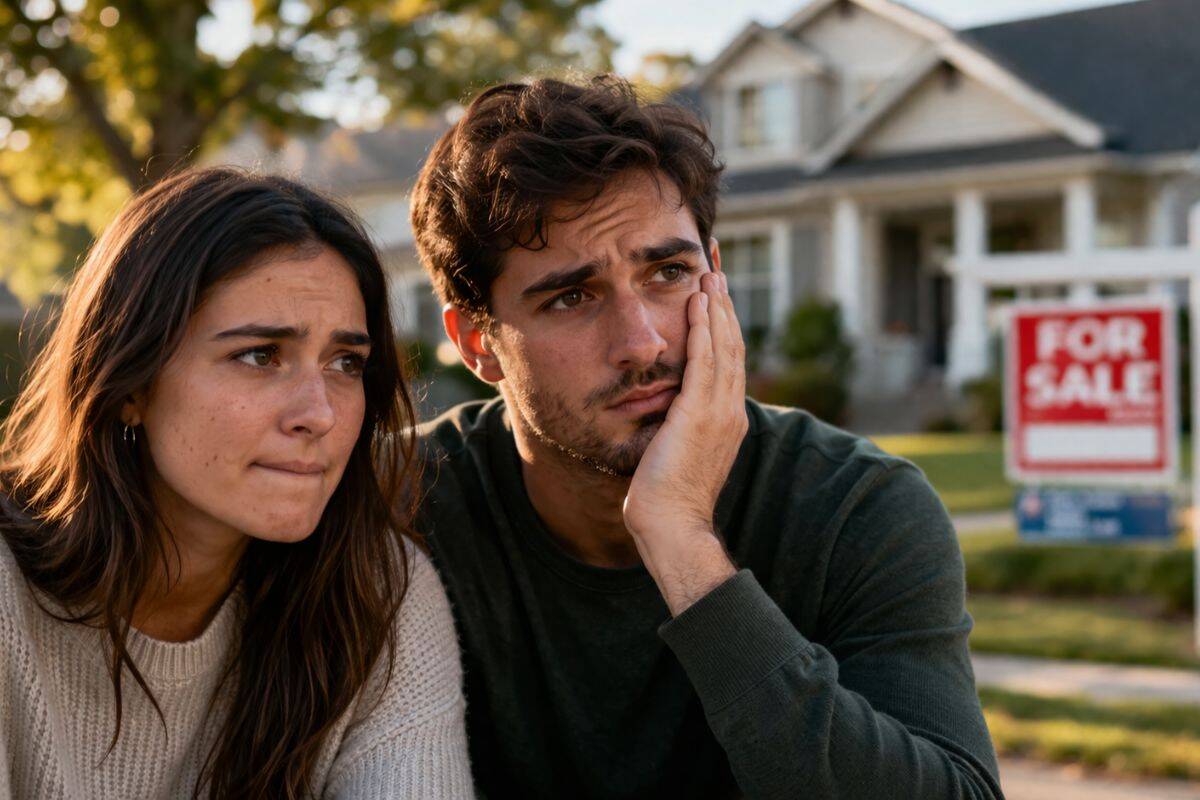
I still remember when owning a home felt like the cleanest kind of adult success. It was the thing people talked about with a little pride in their voice, as if it meant you had finally arrived somewhere solid.
For a long time, the dream carried its own warmth. A yard, a mailbox with your name on it, a place where nobody could raise the rent or decide to move your life around.
That feeling has not disappeared, exactly. It has just gotten harder to recognize under the weight of everything that comes with it now.
I am not alone. Here is what people are actually saying.
1. The monthly payment feels heavier than the dream
There was a time when people thought of a mortgage as a disciplined version of rent. You paid the bank instead of a landlord, and in the end, something belonged to you.
Now the payment can swallow a paycheck before the week is even over. For many families, the dream has started to feel less like stability and more like a permanent financial strain.
2. Saving for a down payment can feel impossible
The old story said you just needed to be careful, set aside a little each month, and eventually you would get there. That story sounds almost quaint now.
When rent, groceries, insurance, and everyday life keep rising, the down payment can feel like a moving target. People are not failing to save because they are careless, but because the ladder keeps getting pulled higher.
3. Interest rates changed the math overnight
A home price is one thing, but the rate attached to it can quietly change everything. Two buyers looking at the same house can end up with wildly different monthly payments depending on when they bought.
That has made many people pause. The dream used to feel straightforward, but now even a decent house can come with a payment that makes your stomach tighten.
4. Maintenance is the part nobody romanticized enough
People love to talk about decorating a home, planting flowers, or finally painting the kitchen the right color. They do not always talk about the roof, the water heater, the broken fence, or the surprise plumbing bill.
Renters complain about landlords, and that is fair. But homeowners learn quickly that every small problem can become their problem, and that reality wears people down.
5. Property taxes keep creeping into the picture
The mortgage is rarely the whole story. Once property taxes and insurance enter the conversation, the number starts to feel less like a payment and more like a warning.
That is one reason many buyers feel caught off guard. They thought they were budgeting for a house, but they were really budgeting for a whole ecosystem of costs.
6. Insurance does not feel predictable anymore
Homeowners used to think of insurance as the boring part of ownership, the part you bought and barely thought about again. That feels less true now.
In many places, premiums have climbed, and in some areas coverage itself has become harder to secure. When people cannot even count on the cost of protecting a home, the whole idea starts to feel shakier.
7. Climate anxiety has entered the housing conversation
People used to choose homes based mostly on schools, commute times, and neighborhood charm. Now they are also thinking about floods, fires, hurricanes, extreme heat, and whether a place will stay livable for the long haul.
That changes the emotional texture of buying. A home no longer feels like just a shelter and a milestone, but sometimes a bet against forces that feel bigger than any one family.
8. Moving used to be a sacrifice, and now it can feel like a strategy
For older generations, buying a home often meant planting roots and staying put. That came with its own kind of dignity.
Younger buyers, though, are more likely to ask whether they need the same kind of permanence. Jobs shift, relationships change, and remote work has made some people less eager to lock themselves into one place for decades.
9. The freedom of renting looks more appealing than it used to
Renting was once treated like a waiting room. People were expected to outgrow it as soon as possible.
Now, for many Americans, renting looks like flexibility. If something breaks, someone else handles it, and if life changes, you are not trying to sell a house in the middle of it.
10. The social pressure around buying has started to wear thin
Homeownership used to be framed as a rite of passage, almost a moral achievement. If you did not own a house, people sometimes assumed you were behind.
That pressure feels exhausting to a lot of people now. They are tired of being told that one path defines adulthood when life has become far more complicated than that old script allowed.
11. The hidden costs keep catching people off guard
People often budget for the price they see online and forget the rest. Closing costs, repairs, appliances, furniture, lawn care, and random surprises can turn a purchase into a long chain of expenses.
That is where the excitement starts to fade. A house stops feeling like a prize and starts feeling like a system that wants something from you every single month.
12. Some buyers are simply exhausted
It takes a lot of energy to look for homes in a market that can feel competitive, expensive, and emotionally draining. People describe the process as stressful long before they ever get the keys.
After enough rejection, compromise, and compromise again, some just step back. They are not rejecting the dream because they do not care, but because they are tired of how much it asks.
13. The definition of success is changing
For a long time, success had a very visible shape. It had a front porch, a garage, maybe a patch of grass, and a mortgage statement tucked into a drawer.
That definition is loosening now. More people are asking whether success means owning a house, or simply having a life that feels stable, affordable, and theirs.
What makes this shift so revealing
The interesting part is that people are not necessarily giving up on homes. They are giving up on the old story that said homeownership would automatically make life feel secure, respectable, and complete.
That story made sense when the rest of life felt more predictable. Now the house itself is still the house, but everything around it has changed.
Maybe that is why the dream feels different. It is not always the core thing people have stopped wanting. Sometimes it is just the price of holding onto it.
